Optimize workspace efficiency, safety, and environmental control with premium Industrial Curtains designed for warehouses, manufacturing facilities, distribution centers, and industrial work environments. These versatile barrier systems help separate work zones, control dust and debris, reduce noise transfer, and improve temperature management without the cost of permanent walls. Our Industrial Divider Curtains and Warehouse Divider Curtains provide flexible space management solutions that can be customized to fit a variety of operational needs. Whether used as Industrial Curtain Walls to create enclosed work areas or as Manufacturing Curtains to separate production processes, these durable Industrial Partitions help improve workflow, enhance workplace safety, and maximize the functionality of industrial and commercial facilities.

Industrial Curtains provide a flexible, cost-effective solution for dividing workspaces, controlling environmental conditions, improving safety, and increasing operational efficiency in commercial and industrial facilities. Whether you need to separate production areas, create temporary work zones, reduce dust, contain overspray, or improve temperature control, industrial curtains offer an adaptable alternative to permanent walls. Their durable construction and customizable configurations make them an ideal choice for manufacturing plants, warehouses, distribution centers, automotive shops, construction sites, food processing facilities, and many other industries.
At Tarps Plus, we offer premium Industrial Curtains engineered to withstand demanding industrial environments while providing reliable performance and long-term durability. Manufactured from heavy-duty vinyl, reinforced fabrics, or clear vinyl panels, our curtain systems help businesses optimize workspace organization while reducing operational costs.
One of the greatest advantages of industrial curtains is their flexibility. Unlike permanent walls, curtain systems can be installed, moved, expanded, or reconfigured as operational needs change. This allows businesses to create temporary production areas, maintenance zones, clean workspaces, storage sections, or enclosed workstations without major construction projects.
Warehouse managers frequently use industrial curtains to separate shipping and receiving areas, isolate inventory, create temperature-controlled storage zones, and improve traffic flow. Dividing large open spaces into functional work areas helps improve organization while supporting greater operational efficiency.
Manufacturing facilities rely on industrial curtains to isolate welding operations, machining areas, paint booths, fabrication stations, assembly lines, and quality control departments. Curtains help contain sparks, dust, overspray, smoke, and debris while improving workplace safety and reducing contamination between production processes.
Automotive repair shops and service centers use industrial curtains to create dedicated work bays, paint preparation areas, detailing stations, wash bays, and maintenance zones. Clear vinyl panels allow supervisors and technicians to maintain visibility while reducing exposure to airborne contaminants.
Construction companies often install industrial curtains to create temporary weather enclosures, isolate renovation projects, reduce dust migration, and protect occupied areas during remodeling work. Portable curtain systems help contractors maintain cleaner, safer job sites while minimizing disruptions.
Food processing facilities and cold storage warehouses use industrial curtains to separate work areas, improve sanitation, reduce energy loss, and maintain temperature-controlled environments. Thermal curtain systems help lower heating and cooling costs while supporting consistent operating conditions.
Industrial curtains also play an important role in employee safety. They help define work zones, improve visibility, reduce noise transmission, contain airborne particles, and separate hazardous operations from general workspaces. This contributes to a more organized environment that supports productivity and workplace compliance.
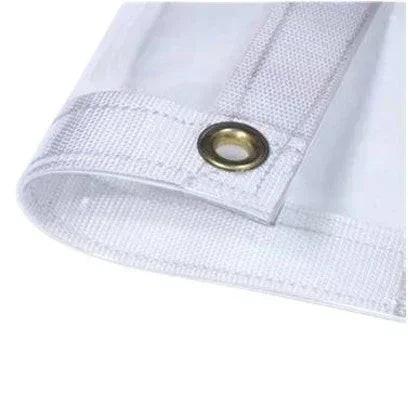
High-quality industrial curtains are manufactured from heavy-duty PVC vinyl, reinforced coated fabrics, insulated materials, or transparent clear vinyl depending on the application. Many systems feature reinforced hems, welded seams, rust-resistant hardware, industrial-grade rollers, ceiling-mounted track systems, hook-and-loop closures, and modular panel designs for maximum durability and ease of operation.
Selecting the appropriate industrial curtain depends on factors such as environmental conditions, temperature requirements, visibility needs, chemical exposure, fire safety considerations, and the size of the workspace. Optional features such as strip doors, viewing windows, personnel access doors, and insulated panels allow businesses to customize their curtain systems for specific operational needs.
Routine cleaning and inspection help maximize the lifespan of industrial curtains. Vinyl surfaces are generally easy to clean using mild detergents, while regular inspections help identify wear before it affects performance.
At Tarps Plus, we proudly offer Industrial Curtains that deliver dependable space separation, environmental control, and durable performance for a wide range of commercial and industrial applications. Whether you're organizing a warehouse, improving manufacturing efficiency, creating temporary workspaces, or enhancing facility safety, our curtain systems provide a practical and economical solution.
From manufacturing plants and distribution centers to automotive shops, food processing facilities, and construction sites, Tarps Plus Industrial Curtains help businesses create safer, cleaner, and more efficient work environments.
Creates temporary or permanent work areas without constructing walls.
Helps reduce energy loss by separating climate-controlled spaces.
Contains dust, debris, overspray, sparks, and other workplace hazards.
Manufactured from durable industrial-grade vinyl and reinforced materials.
Provides an economical alternative to permanent building modifications.
Curtain systems can be expanded or relocated as operational needs change.
Creates clearly defined work areas that support productivity and workflow.
Designed to withstand demanding industrial environments and repeated daily use.
Industrial Curtains are heavy-duty flexible partitions used to divide workspaces, improve environmental control, and enhance safety in commercial and industrial facilities.
They are used for warehouse partitions, manufacturing areas, welding stations, paint booths, cold storage, construction projects, and dust containment.
They are commonly manufactured from heavy-duty PVC vinyl, reinforced coated fabrics, insulated materials, or clear vinyl panels.
Yes. They help separate temperature-controlled areas, reducing heating and cooling losses.
Absolutely. They are widely used to organize warehouse space, separate inventory, and improve workflow.
Many curtain systems are available in various sizes, materials, colors, and configurations with optional doors, windows, and track systems.
Yes. Many industrial curtains incorporate transparent vinyl sections that allow visibility while maintaining separation.
Most vinyl curtains can be cleaned using mild soap, water, and a soft cloth or sponge.
Yes. One of their biggest advantages is the ability to relocate or modify curtain layouts as facility needs change.
Tarps Plus offers premium Industrial Curtains manufactured with heavy-duty commercial-grade materials, durable hardware, flexible configurations, and dependable long-term performance for warehouses, manufacturing facilities, construction sites, automotive shops, food processing plants, and other industrial environments.

After decades of research on material and use, Tarps Plus™ has set the tarp industry's highest standards for better performance with our "Chapter Ahead" policy. Learn more about the Tarps Plus™ "Chapter Ahead" policy here.

Price Protection ensures that our customers enjoy the best pricing found in the online tarps industry, PLUS the best quality for the grade.

For Decades Tarps Plus™ has led the tarp industry in innovation, quality, and leadership. www.tarpsplus.com is almost as old as the internet itself.

Tarps Plus™ operates out of our facility in Georgetown, Texas, with some of the fastest delivery times in the online tarp industry, as well as a 30-day quality guarantee.